There goes the neighborhood
July 3, 2013 § 1 Comment
It’s official: That re-do of the Ralph’s shopping center on Glendale Boulevard in Silverlake that I wrote about in the spring will feature, according to the L.A. Times, a Whole Foods store. Right now, the closest WF is in NE Glendale, with the one across from The Grove a distant second.
I should be ecstatic, right? I’ll no longer have to worry about Rice Dream bars melting before I get home.
But ecstatic I’m not and here’s why:
1. Ralph’s is staffed by union workers who get union wages and benefits. Ralph’s will move out so WF can move in–and WF has made sure that none of its stores are unionized.
Full disclosure: I don’t shop at Ralph’s much, preferring Trader Joe’s, which also is non-union. But lots of other people in the neighborhood do shop at Ralph’s, providing those union workers with jobs. Where will those employees go and where will neighborhood folks shop?
2. Not necessarily at WF–or Whole Paycheck, as friends prefer to call it–an upscale emporium selling natural and organic foods along with gourmet speciality foods (Exhibit A: their selection of olive oils). WF doesn’t carry the lower cost brands that Ralph’s does.
3. WF will not be a neighborhood store; shoppers will come from all around. Which means traffic, lots more traffic. The Silverlake/Glendale/Fletcher intersections already are gnarly during rush hours; what will it be like with WF in that block? Thinking about it gives me a headache.
4. WF’s founder and CEO, John Mackey, is a free market libertarian who called the Affordable Care Act “fascist”* and thinks climate change is not necessarily a bad thing. From one natural foods store in Austin, TX, WF has grown to more than 340 in the U.S., Canada, and U.K. Mackey’s business model has been to buy up or merge with other companies, often in a predatory manner, driving many local and regional chains out of business. I hate giving money to this guy.
5. Lastly, I keep thinking about those Rice Dream bars. How am I going to resist taking a three block walk every time I feel the urge for one?
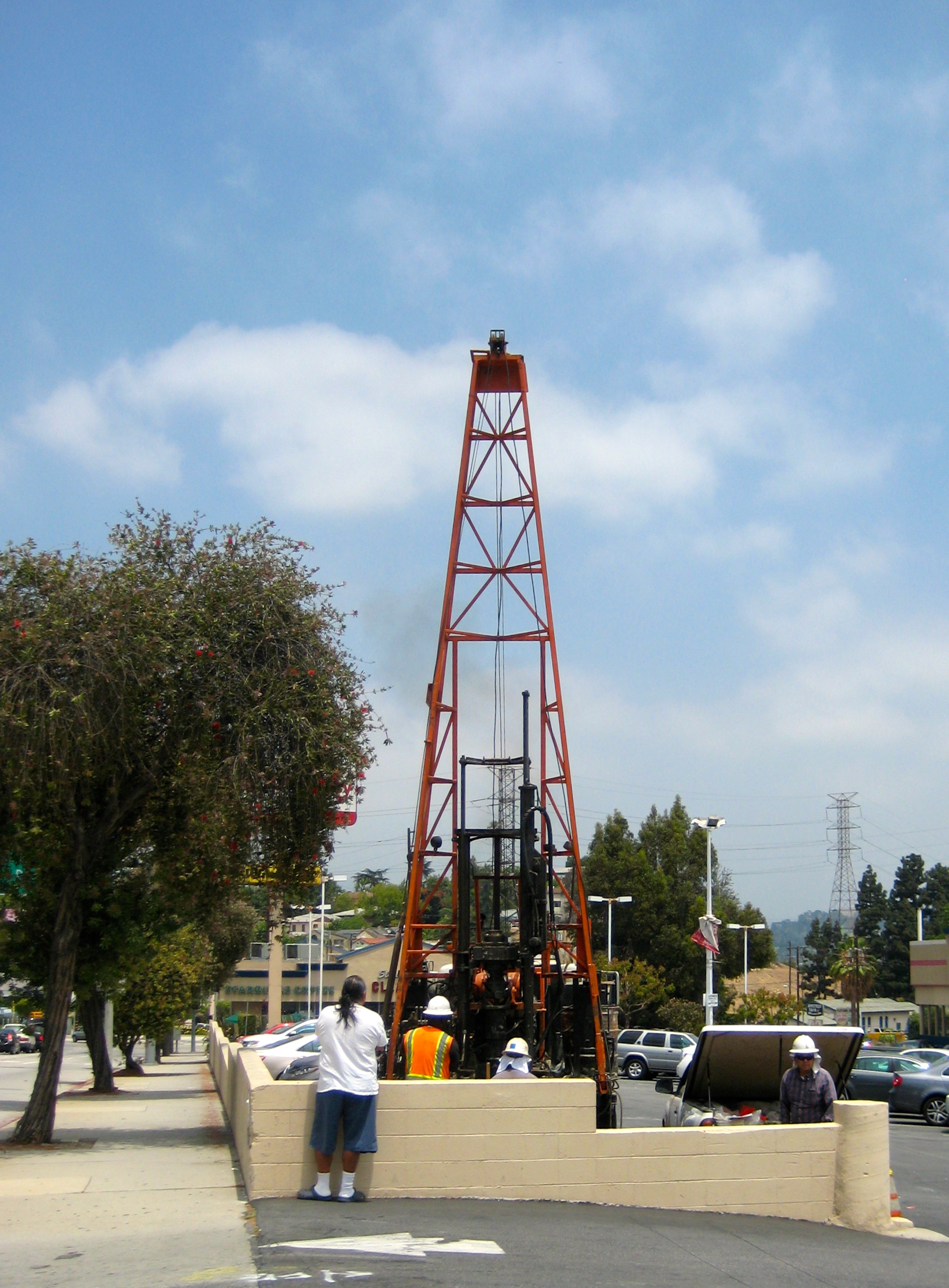 Drilling rig in Ralph’s parking lot taking core samples in advance of construction.
Salvador B. Castro, presente
June 12, 2013 § Leave a comment
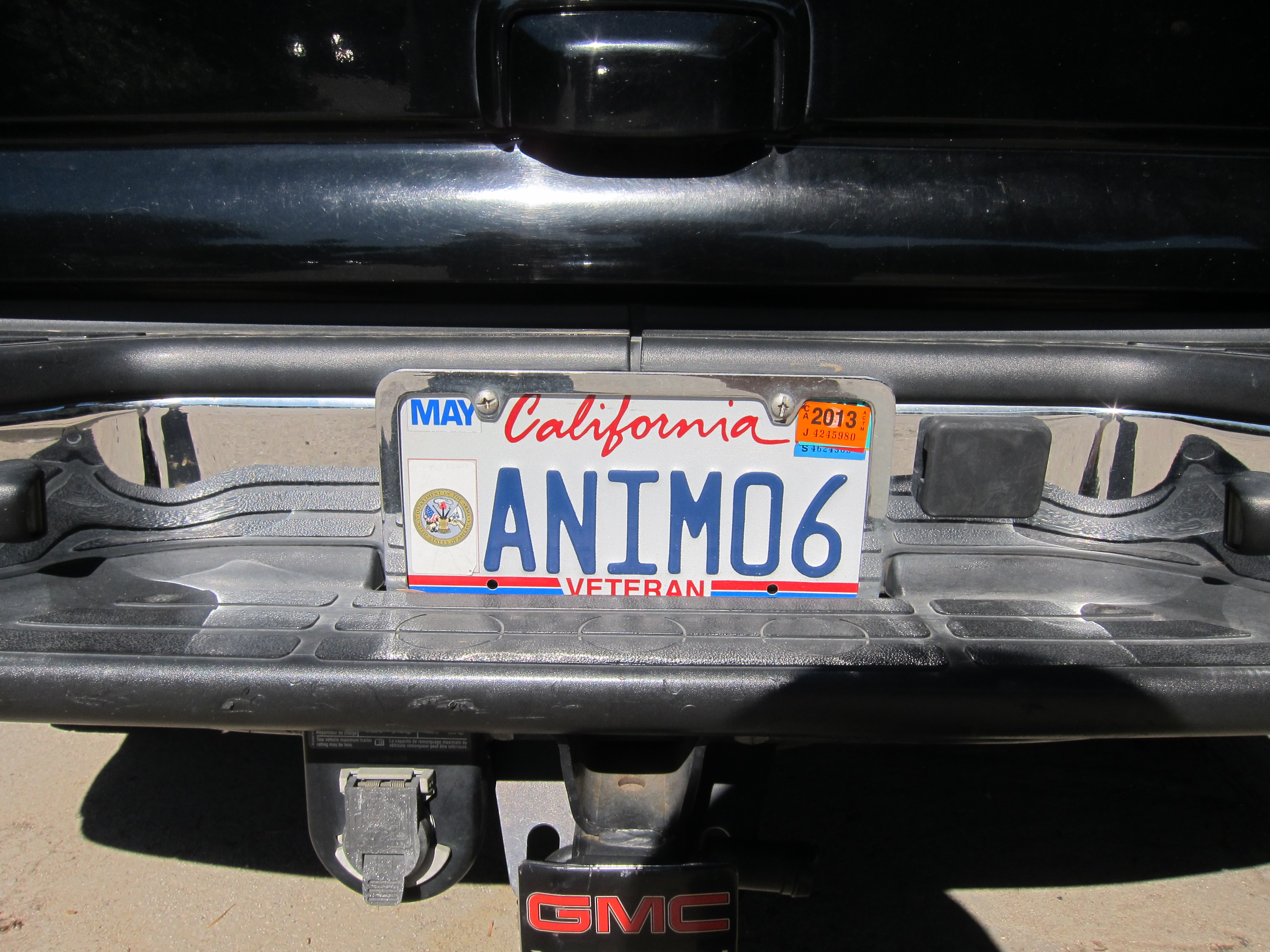 I picked up the LA Times one day in April and read the lengthy obituary of a fiery Chicano educator of the 1960s named Sal Castro. Looking at the photo, I realized Sal was a neighbor, the beefy guy who worked in an office in his garage and whom I saw, when the door was up, on my neighborhood walks. The guy with license plates reading ANIMO (which means “soul” in Spanish, and could also mean “courage” and “encourage”). The heavy-browed guy who never said hello or smiled.
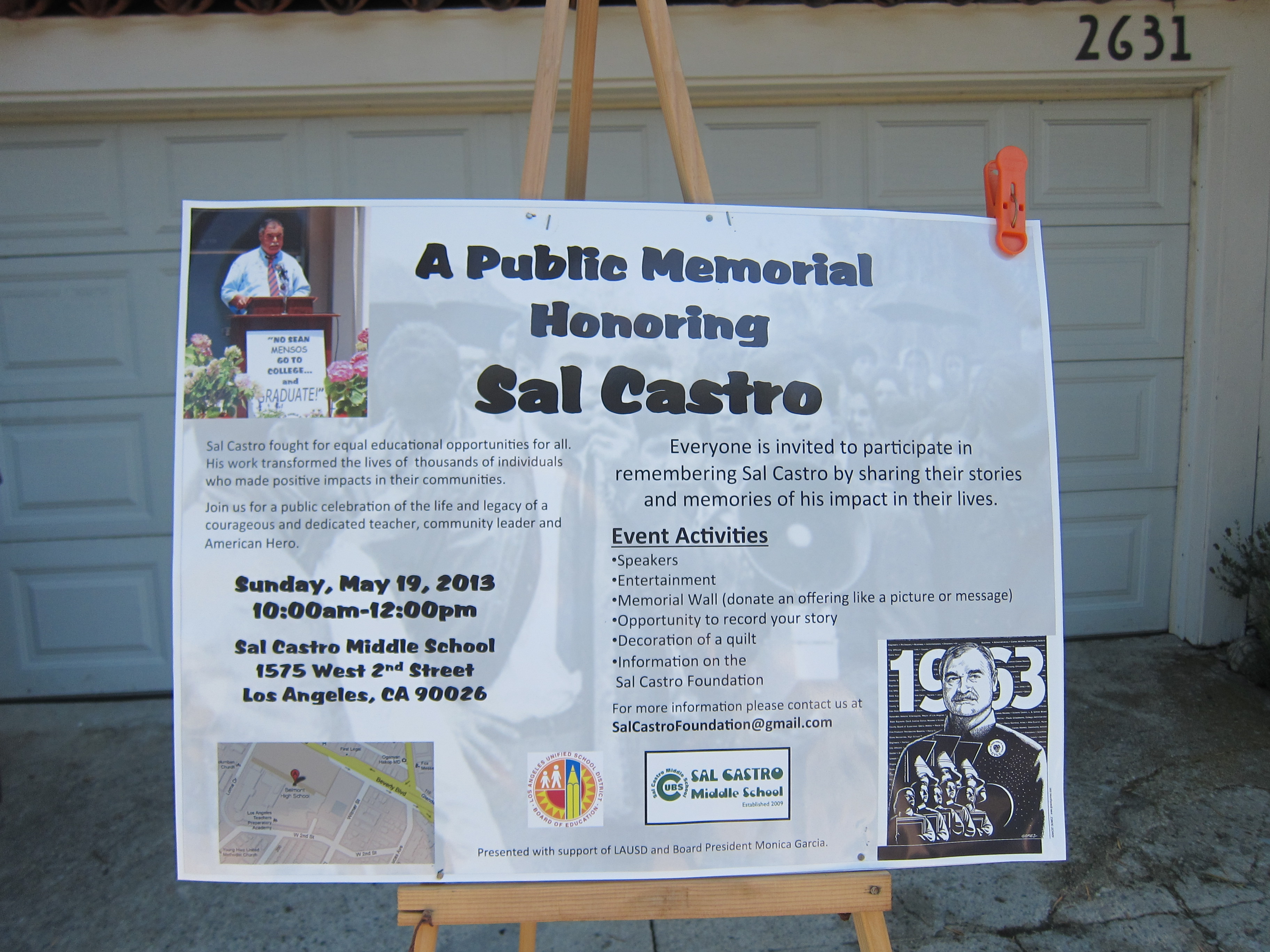 His identity was confirmed when a poster appeared in front of that same garage announcing a memorial service. The Times even covered his funeral at the cathedral downtown attended by 600 people, including Mayor Antonio Villaraigosa.
Sal Castro would have had stories to tell if I had known who he was and had had the courage to ask. According to his obit, in the late ‘60s Castro was a brand new LAUSD social studies teacher who encouraged his Chicano students to speak up about the overcrowded and run-down schools, lousy teachers, sky high dropout rates, and counselors who thought Latinos belonged in auto shop, not college-prep classes.
In what became a formative event in that era’s Chicano Movement, 1,000 students at five high schools walked out of class March 5, 1968, sparking a broader protest that spread to 15 schools over several days. (Villaraigosa was one of those students.) That landed Castro and 12 others in jail on conspiracy charges and he lost his job.
After parents protested, Castro was rehired by LAUSD but was moved from school to school as a substitute for several years until finally being assigned to Belmont High near downtown. He taught at Belmont for more than 30 years until his retirement in 2004.
Castro apparently had a secure identity and Chicano pride at an early age. Born to Mexican immigrants in Boyle Heights, Castro started school in Mexico, learning to read in Spanish. When his parents returned to LA and Castro entered second grade, his teacher sat him in a corner because he couldn’t speak or read English.
According to the Times, “I started thinking, these teachers . . . should be able to understand me. I didn’t think I was dumb–I thought they were dumb.”
Fortunately for thousands of Chicano students, Sal Castro channeled his anger at dumb teachers into challenging L.A.‘s racist educational system. He received national attention for his work in 2006 when Edward James Olmos directed an HBO movie, Walkout, about that period of his life. And it seems LAUSD finally forgave him his bold and outspoken ways: in 2010 the institution sharing Belmont’s campus was named the Salvador B. Castro Middle School.
Not just another grocery store
June 3, 2013 § 2 Comments
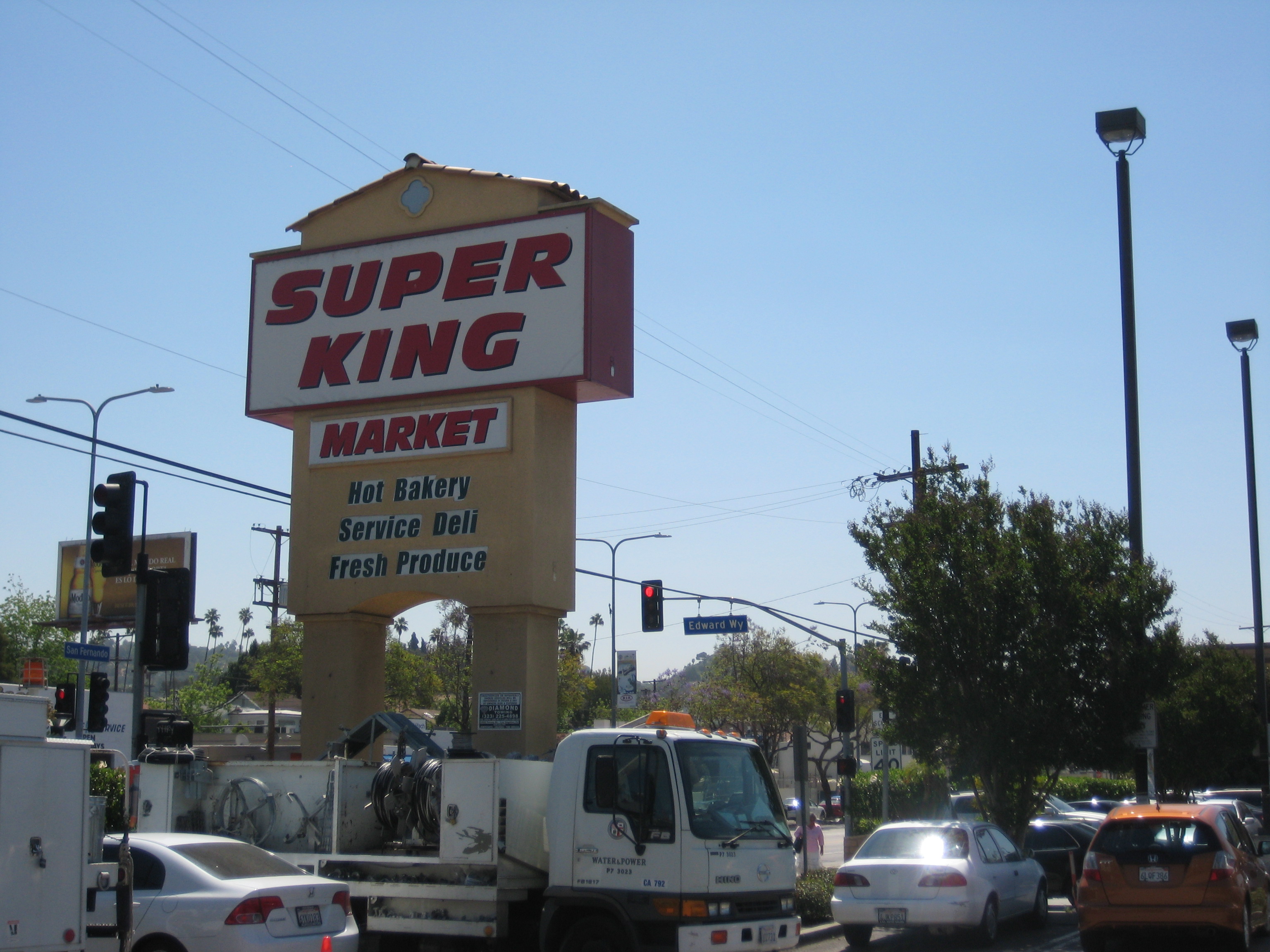 There’s a grocery store in Glassell Park that I think of as existing on the boundary between Mexico and Armenia.
Just off the 2 freeway on San Fernando Road, Super King is where you shop if a) you want “ethnic” foods that few stores stock and b) you have to feed a lot of people on little money and c) you believe meals don’t come from a box, can, or freezer compartment but from hours in a kitchen and d) standing in line is a way of life and e) you believe reusable shopping bags are optional.
Super King is never not busy. I’ve driven by at 8:20 a.m.–the store opens at 8– and not only are cars streaming into the lot, shoppers with stuffed plastic sacks wait at the curb for MTA buses that will take them home.
Shopping begins before entering the store. Outside the entrance, bins the size of Rhode Island hold bargain-priced produce: oranges or corn or watermelons or whatever else is in oversupply.
Before shopping, however, you have to find a cart to put your stuff in. Few shoppers return carts to the front of the store or even to satellite holding pens; they’re left . . . wherever. 
Once you corral a cart–and they’re BIG ones–you have to fight your way inside the store and through the crowded aisles. I quickly learned that WASP-y behavior doesn’t get you very far at Super King. No one–and I mean NO ONE–gives way.
[I’ve often wondered: Is this “every shopper for him/herself” M.O because customers come with so many different languages and cultural norms that the idea of “common” courtesy is meaningless? Or because “every shopper for her/himself” IS the cultural norm in shoppers’ home countries?]
The massive produce section (where nothing is pre-packaged and digging through an entire pile of plums to find the absolute best is A-OK) could house an entire Fresh & Easy store. Items barely represented at Ralph’s or Von’s–Russian pickles, Armenian relishes, two kilo plastic barrels of Kalamata olives–occupy extended shelf space. They bear labels printed in Bulgaria, Romania, Turkey, Lebanon, and the West Bank.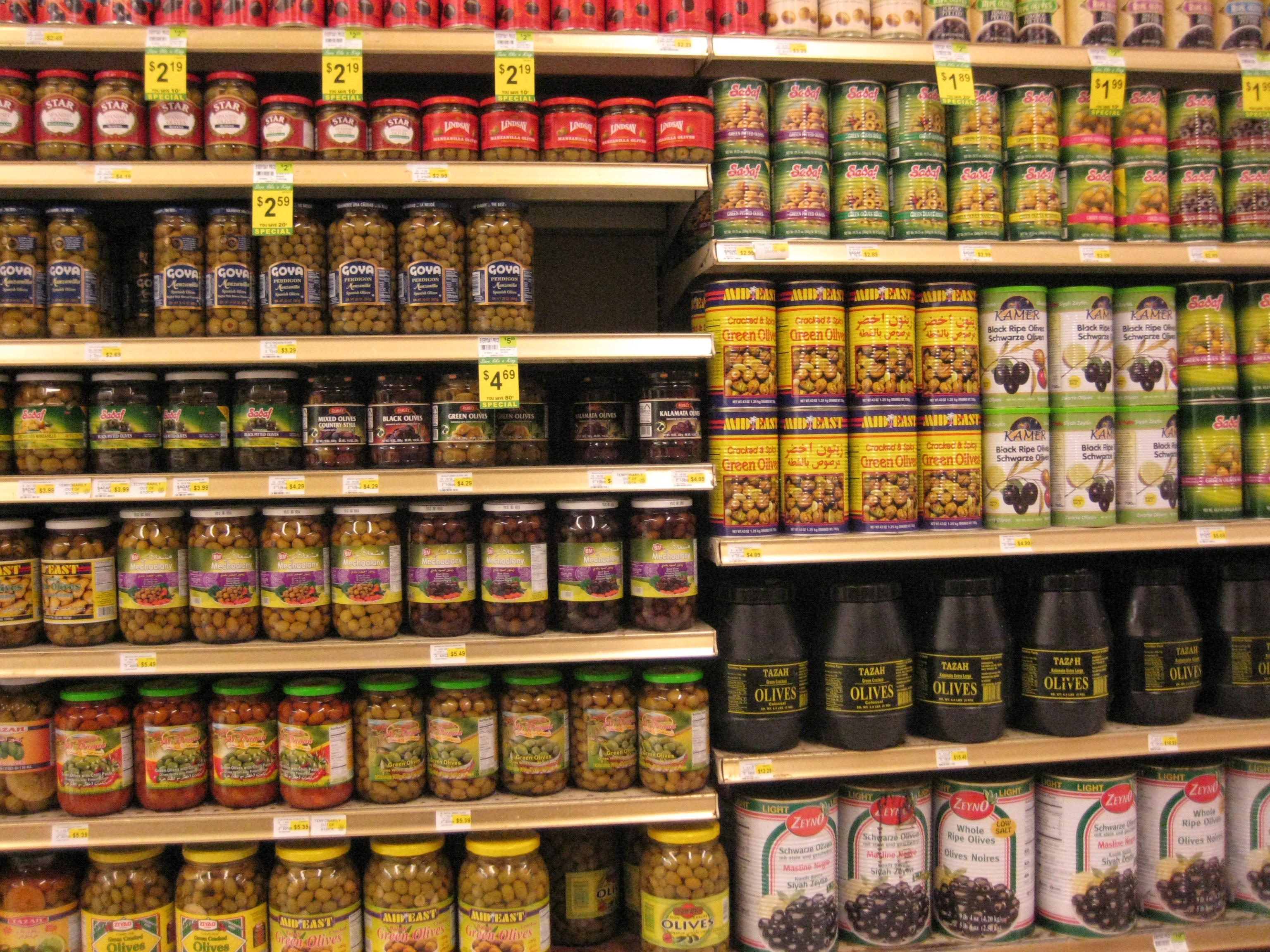
You’ll find coffee at Super King, but tea rules: the store had enough pressure-packed, one-pound bricks of green, black, and fruit infused tea to rebuild the Berlin Wall.
And then there’s rice: 10 and 25 pound bags of the stuff stretch for entire aisle. Ditto bags of beans, peas and lentils.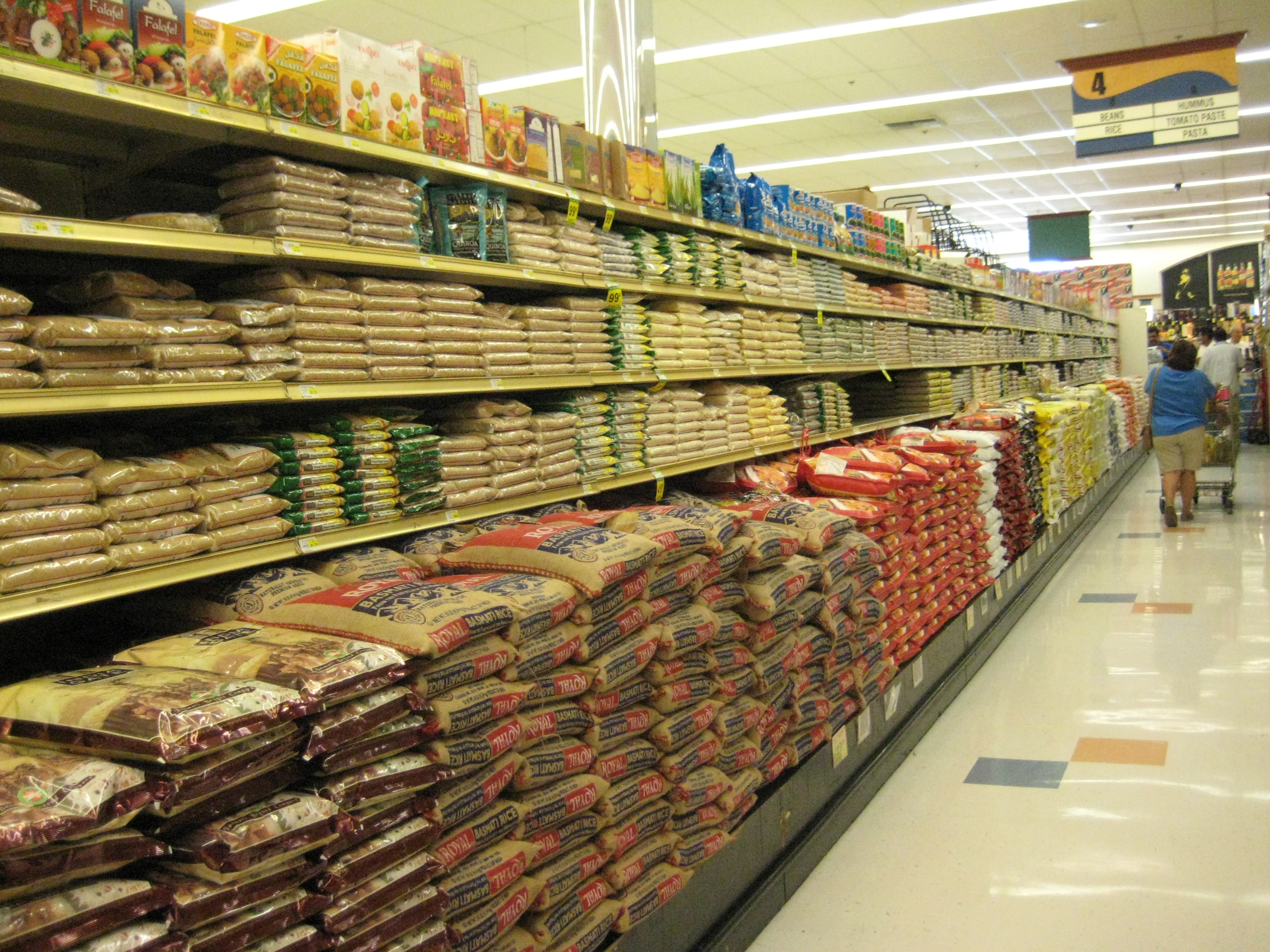
At the deli counter you can buy eight different nationalities of feta and salamis from every country east of the Danube. Fish, poultry, meats, baked goods, nuts & dried fruits each have their own counter: take a number and stand in line. You want baklava? Halva? A tamale steamer? It’s there. As are modest quantities of standard items like orange juice, paper towels, and breakfast cereals.
Your cart of goods will be rung up with dispatch by a bored-looking woman named Nare or Milena or Anahit, though there might be some more of that waiting in line business to get through first.
Exit past the water-pipes, lottery tickets, and security guards, then watch out for in-coming cars as you cross the parking lot.
And your cart? Do something radical: Put it where it belongs.
Jacaranda time
May 30, 2013 § Leave a comment
Twenty-one years ago this week I arrived in L.A. I had accepted a job offer and came with my meagre collection of worldly possessions intending to stay, oh, maybe two years, three at the most.
But I fell in love with a native Angeleno and here I am, 21 years later.
 The night before entering the city proper, I stayed with friends in Pomona. I recall one of them remarking on how the jacaranda trees were still blooming so late in their season.
Maybe late for that end of the San Gabriel Valley; I’ve since discovered that here in the city, jacarandas often stay in bloom right through June Gloom, a gift this noir City of Angels badly needs and hardly deserves.
After more than two decades, jacaranda season still makes me dizzy with its visual splendor. When the trees blossom, a hazy purple canopy descends upon the city. Swathes of purple shadows litter sidewalks and lawns.
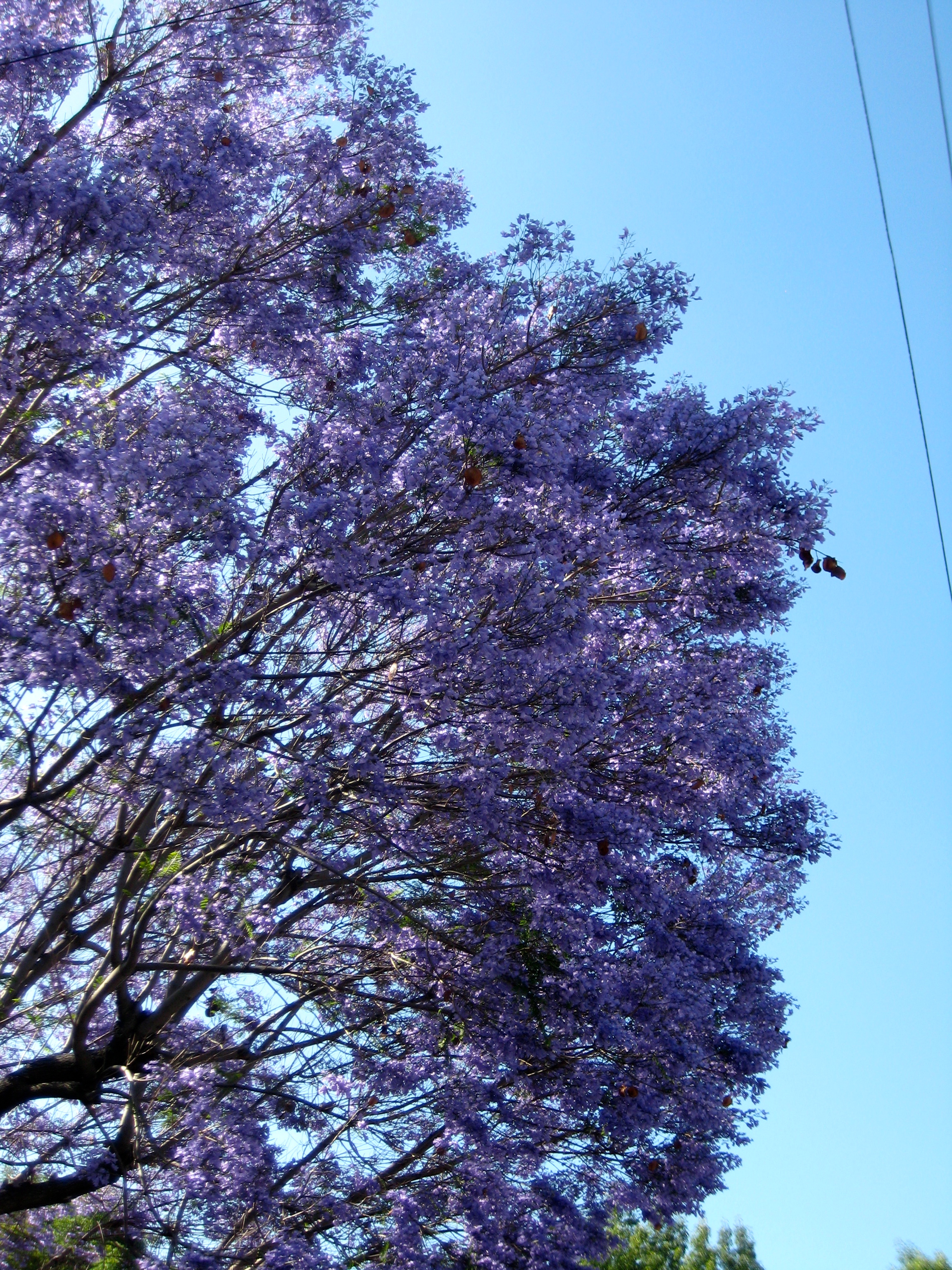 Viewed against our fairy-tale blue Southern California skies, a jacaranda tree can take my breath away.
I wondered for years whether jacarandas were a California native and was misled for a time by an unlikely source into thinking they originated in South Africa: In his inauguration address, Nelson Mandela mentioned several of South Africa’s landmarks and jacarandas were included. But, no, Jacaranda mimosifolia actually hails from southern and western South America. They have now invaded frost-free zones all over the world.
Much as I appreciate the native plant movement, I’m delighted jacarandas made it to our shores.


Under the sign of the dove
May 8, 2013 § Leave a comment
Eat. Meet. Shop. Do Good.
It’s the motto of Mercado La Paloma, where you can, well, do all those things.
Eat food from the Yucatan, Oaxaca, Michoacan, Thailand or have a good ol’ American burger.
Meet friends, pull a few tables together, and have a leisurely meal or rent the mercado’s community room.
Shop for gifts from Oaxaca or the Yucatan, get a garment altered, buy insurance or groceries.
Do good because the mercado is a project of the Esperanza Community Housing Corporation and serves an incubator for new businesses and a bit of economic development for the Figueroa Corridor south of downtown.
The second floor of the building is home to half-a-dozen nonprofits, including the Program for Torture Victims, which produced We Are Here.
Esperanza was founded by one of those remarkable women drawn to Roman Catholic religious orders who do so much good work: Diane Donoghue, MSW, a Sister of Social Services.
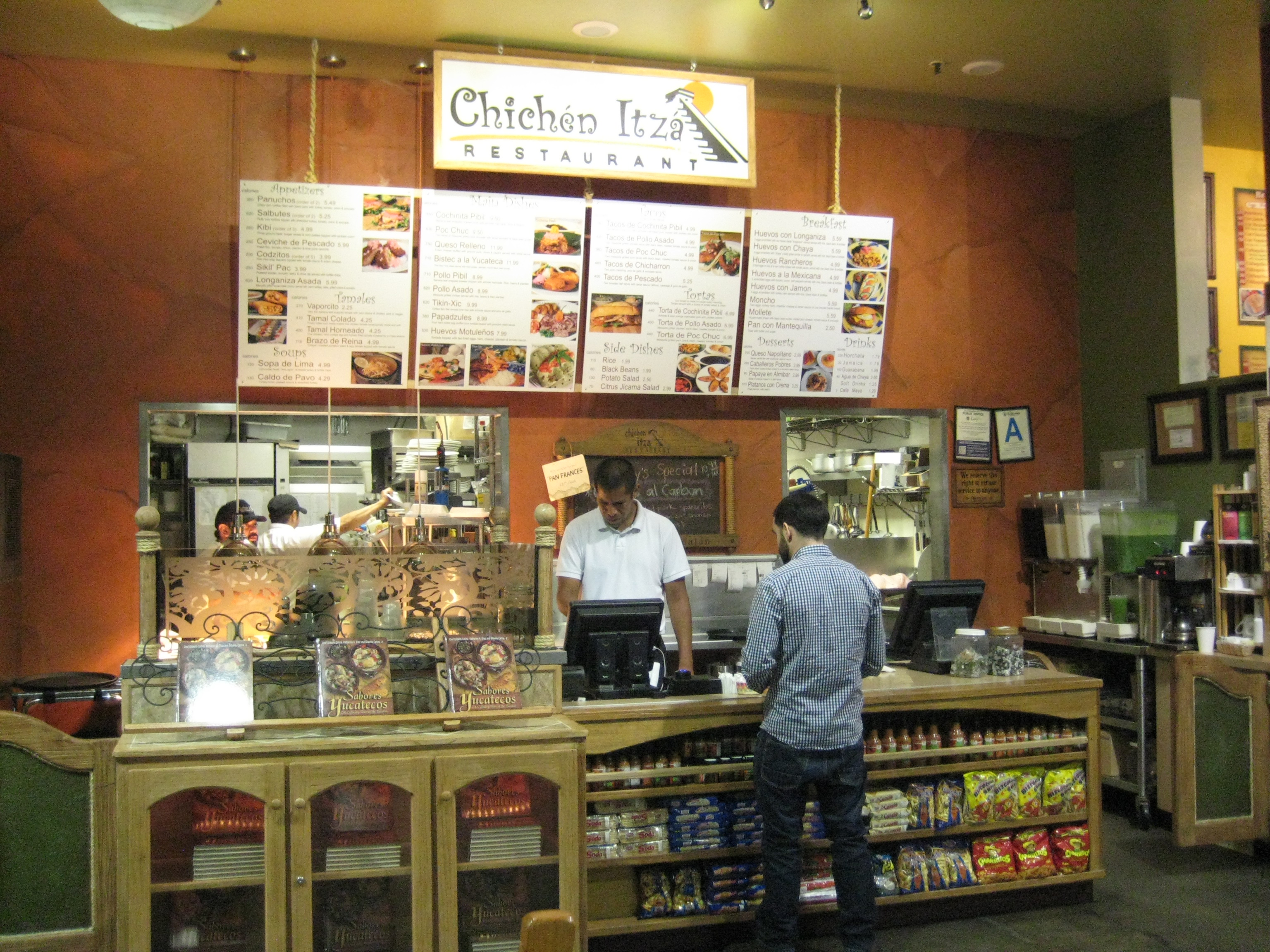 But you don’t need to know all this to enjoy the wonderful food at Chichen Itza, the mercado’s Yucatan restaurant where we ate recently. My mouth waters as I remember the pollo pibil, chicken marinated in achiote, sour orange juice and spices, then cooked in banana leaves.
“Honey, let’s eat at Mercado La Paloma tonight. I’m hungry.”
SoCal exotica
May 8, 2013 § 1 Comment
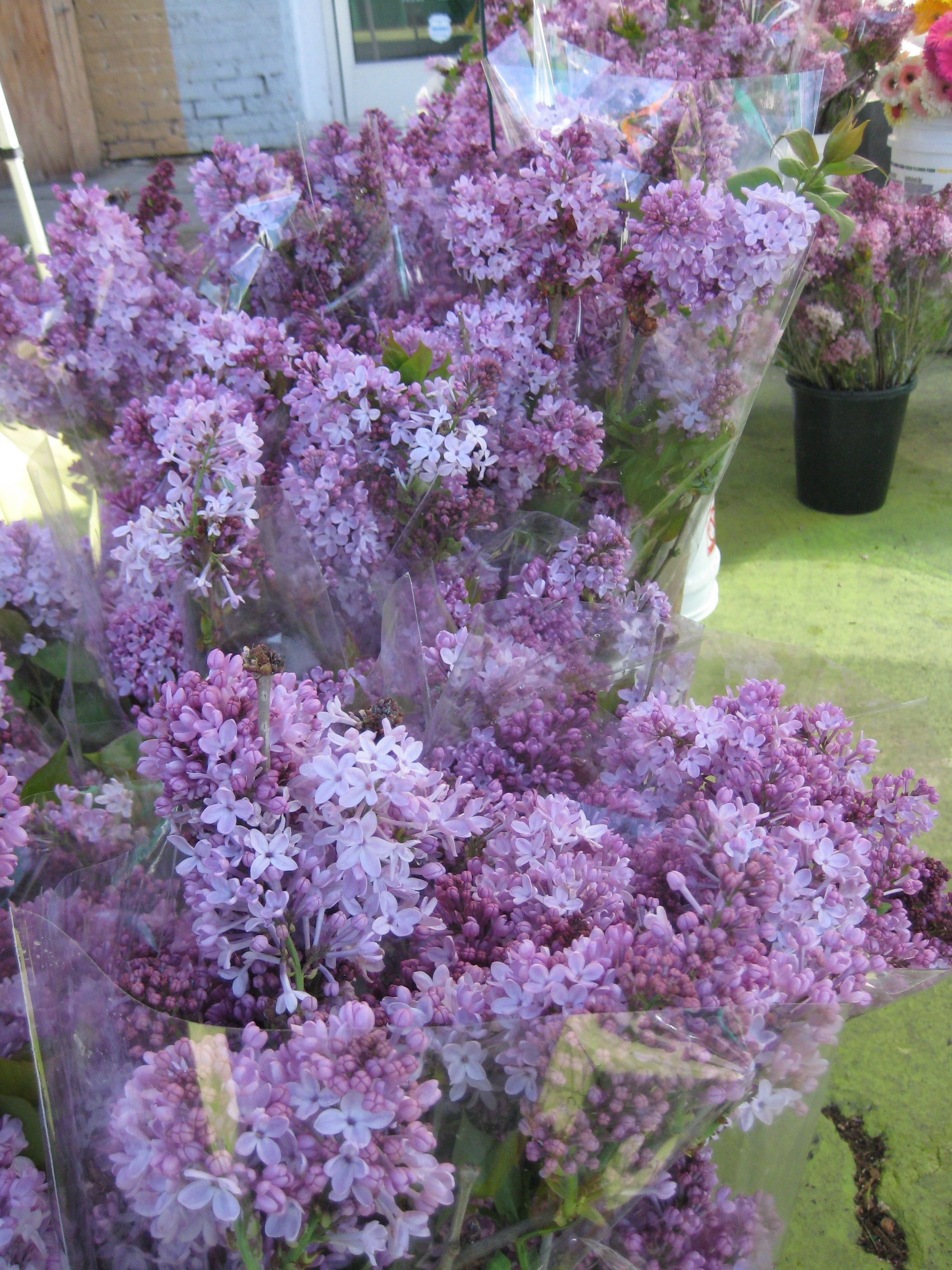 It’s been lilac season and flower vendors have been bringing great purple armfuls to the farmers’ markets. Like daffodils and tulips, lilacs need cool weather to thrive; in L.A., they’re an exotic shrub, just as birds-of-paradise are back east. Most of what’s sold here come from high elevations—places like Tehachapi, where apples and stone fruits also grow well.
Whenever I see bunches of lilacs, I sink my face into the blossoms and inhale deeply. They’re frightfully expensive, so their scent is all I can afford to take away with me. That and memories of growing up in lilac territory. When lilacs appeared, we knew that spring had taken hold at last.
Lilacs, sweet gum seed pods—it’s remarkable what can evoke memories, which, in turn, so easily engender nostalgia. And a weighty sense of loss.

Why I sometimes think I live in Central America.
May 1, 2013 § Leave a comment
One of the benefits of CicLAvia—when city streets are closed to all but human powered modes of transport— is the opportunity to see parts of L.A. we normally zoom through in automobiles.
That was the case during the CicLAvia earlier this month when I walked from McArthur Park to City Hall. Seventh Street was the primary thoroughfare from downtown to Alvarado Street; walking there, it became clear that I was in another realm. The evidence?
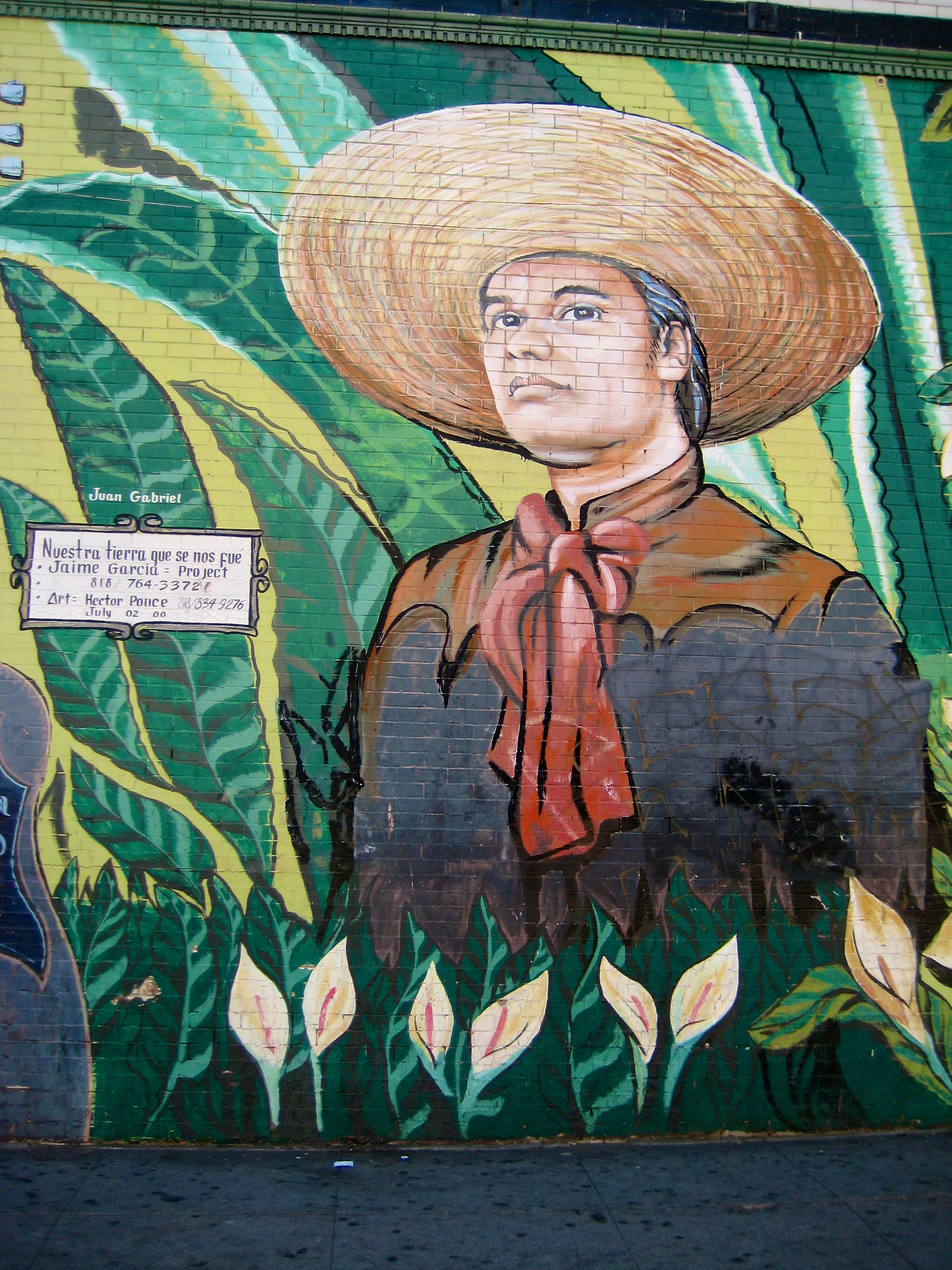
Murals.
The framed legend on this mural reads,
“Nuestra tierra que se nos fue,” Jaime Garcia Project, with a phone number, muralist’s name and a date. The name Juan Gabriel is painted on the wall above the frame.
I wish I knew if this were an idealized vision or portrait of an historical figure (I think we can at least rule out the Cardinal pitcher of the same name).
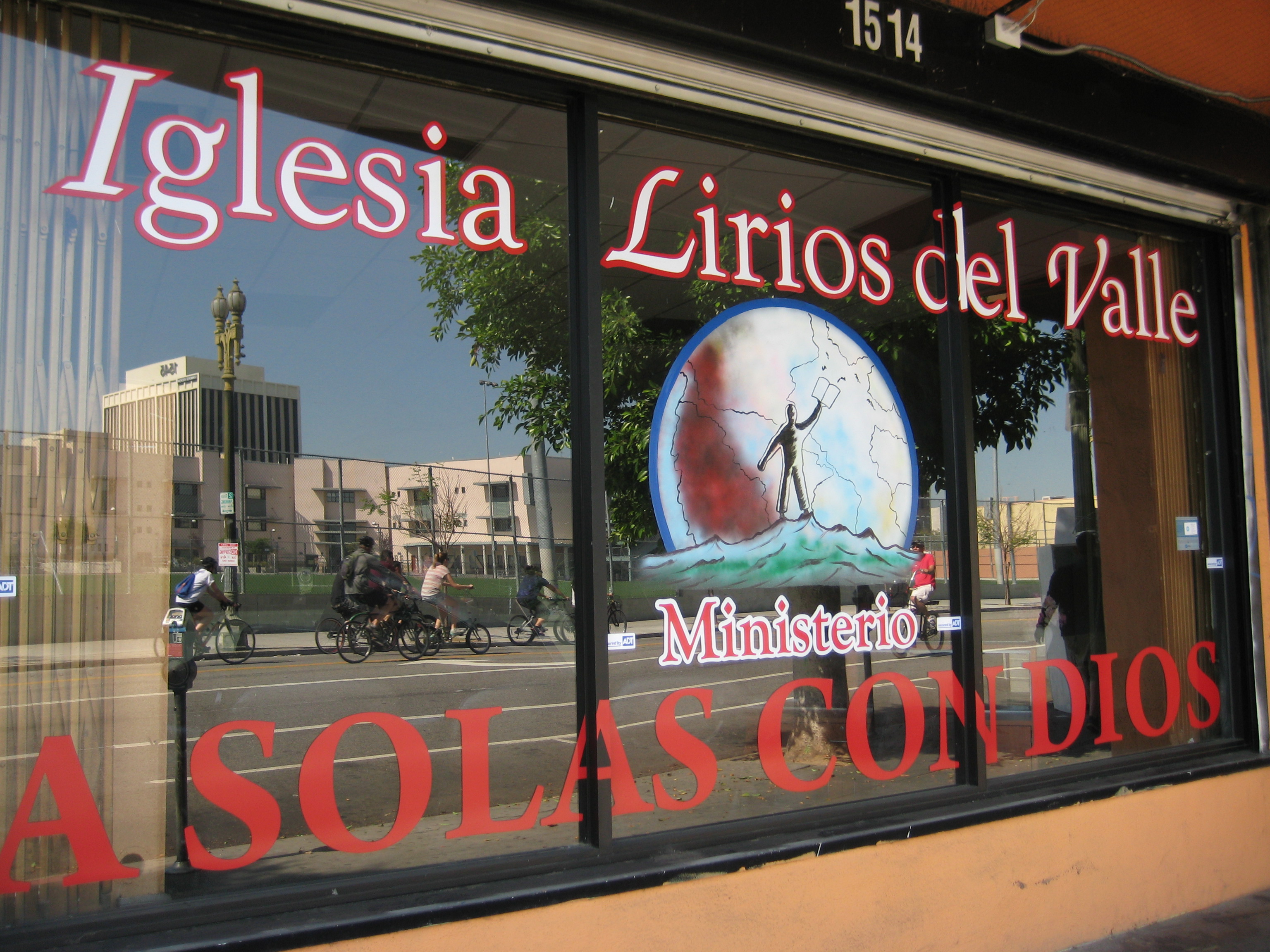
Churches
.
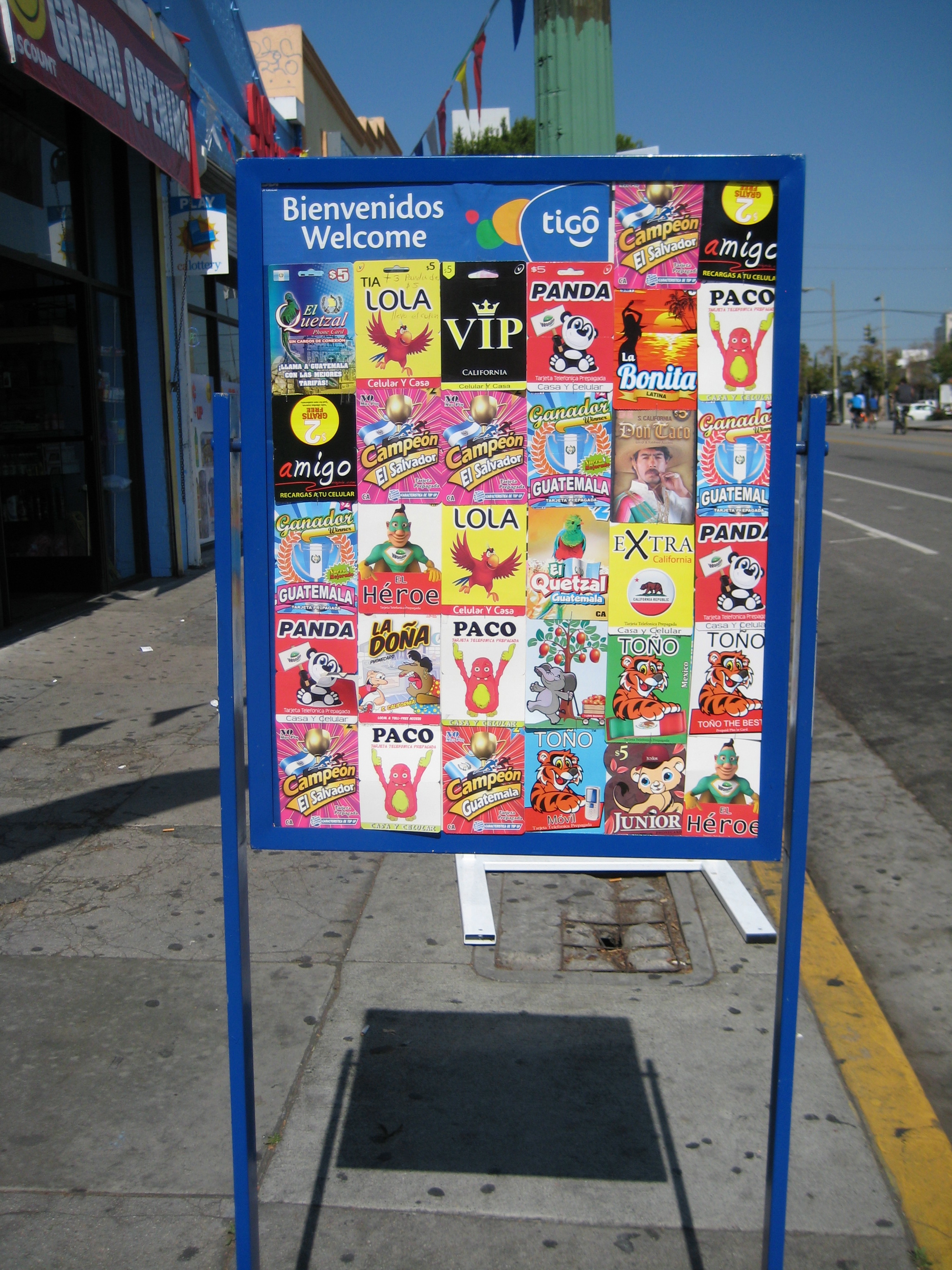
Phone cards for Mexico, Central and South America

Super economical shops and companies that ENVIOS DIRECTOS SIN INTERMEDIARIOS A GUATEMALA LA! (LA = Latin America, not the City of Angels.)
And imagery influenced by Day of the Dead.
Gather together
April 18, 2013 § Leave a comment
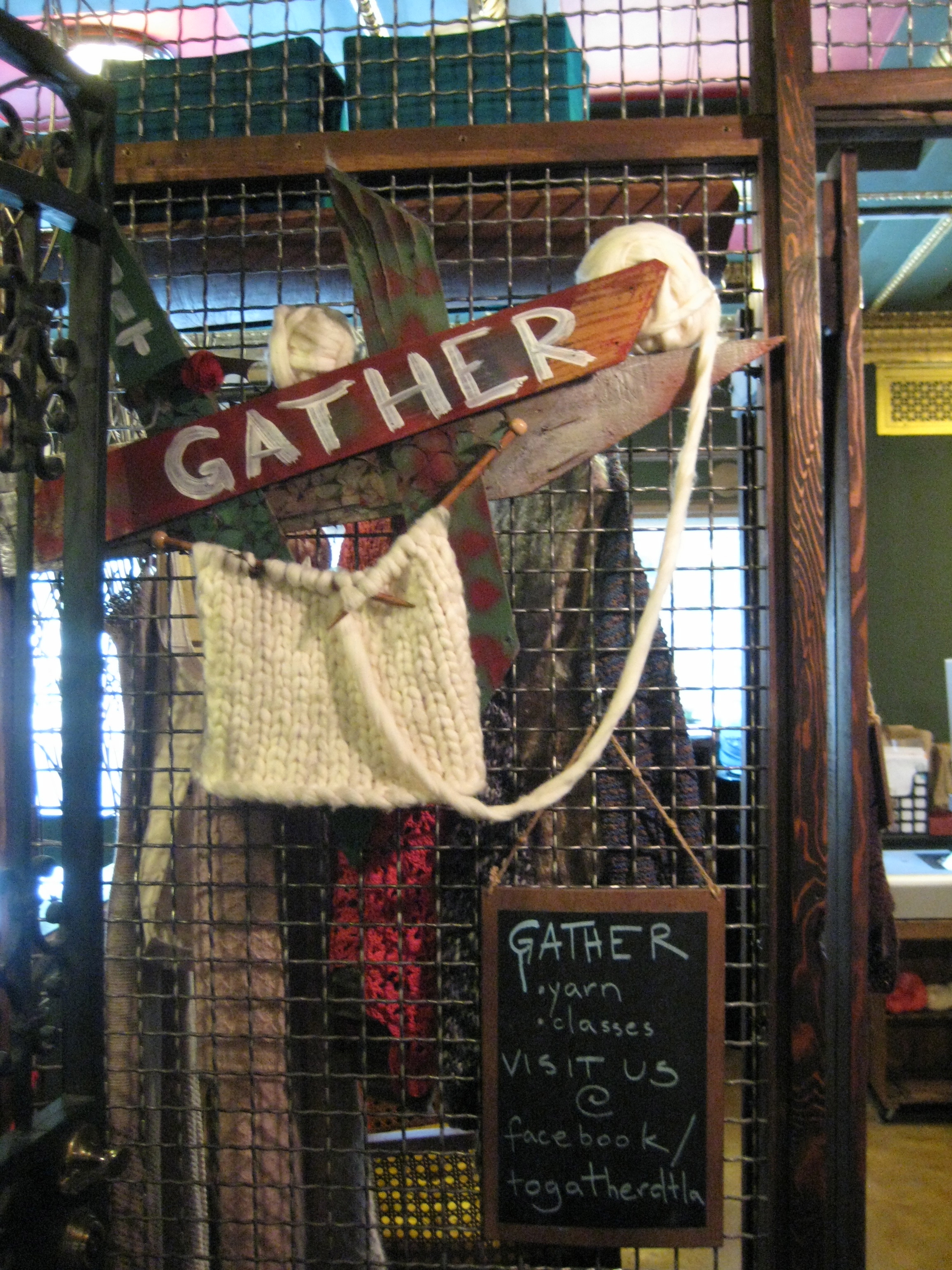
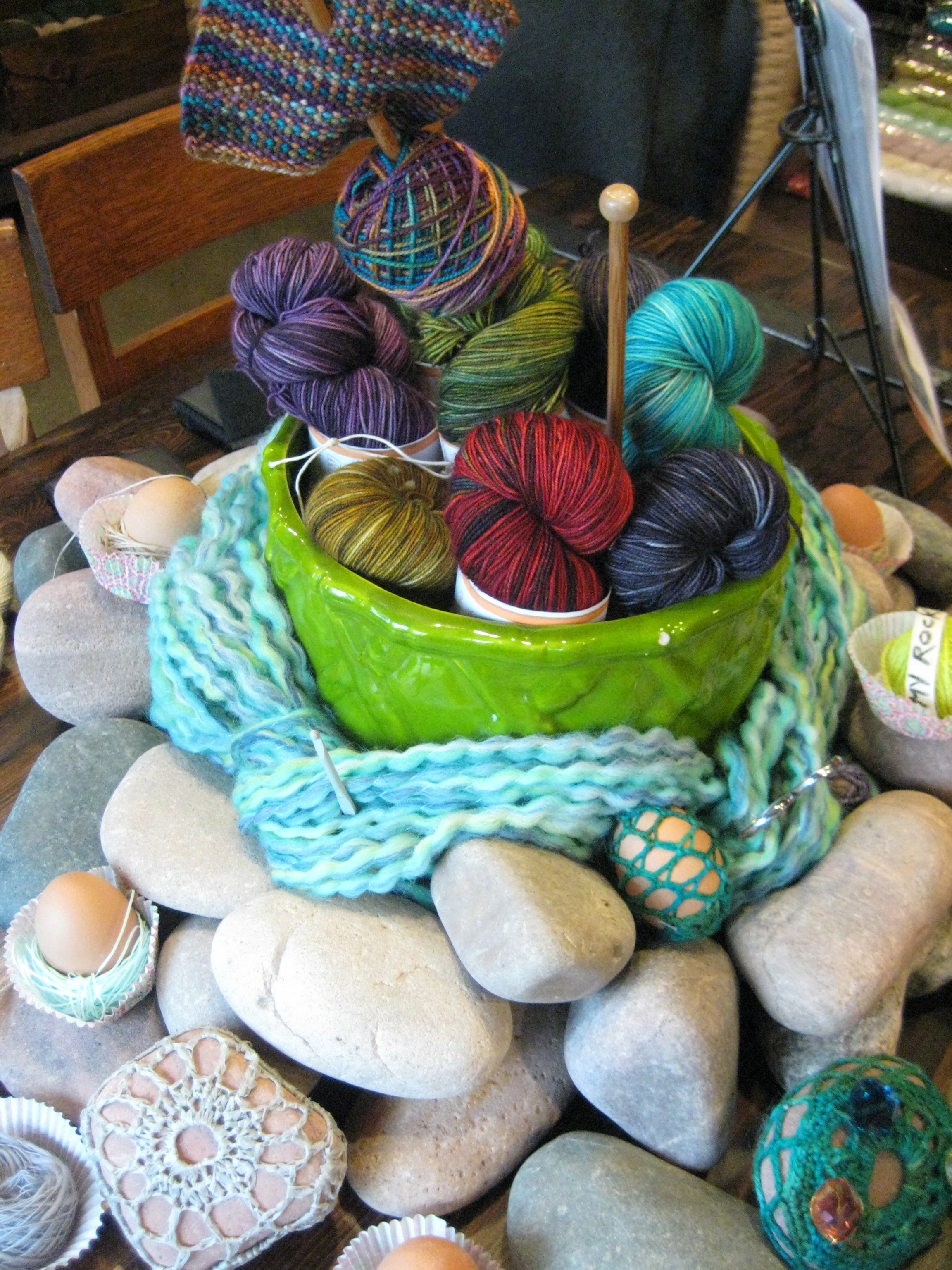 I’d heard of an art walk and a pub crawl, but never a yarn crawl before last weekend when I stumbled upon the event during a visit to The Last Bookstore. Seeing that the tiny yarn shop on the mezzanine was open, I went upstairs to check it out and found myself in a Very Busy Place.
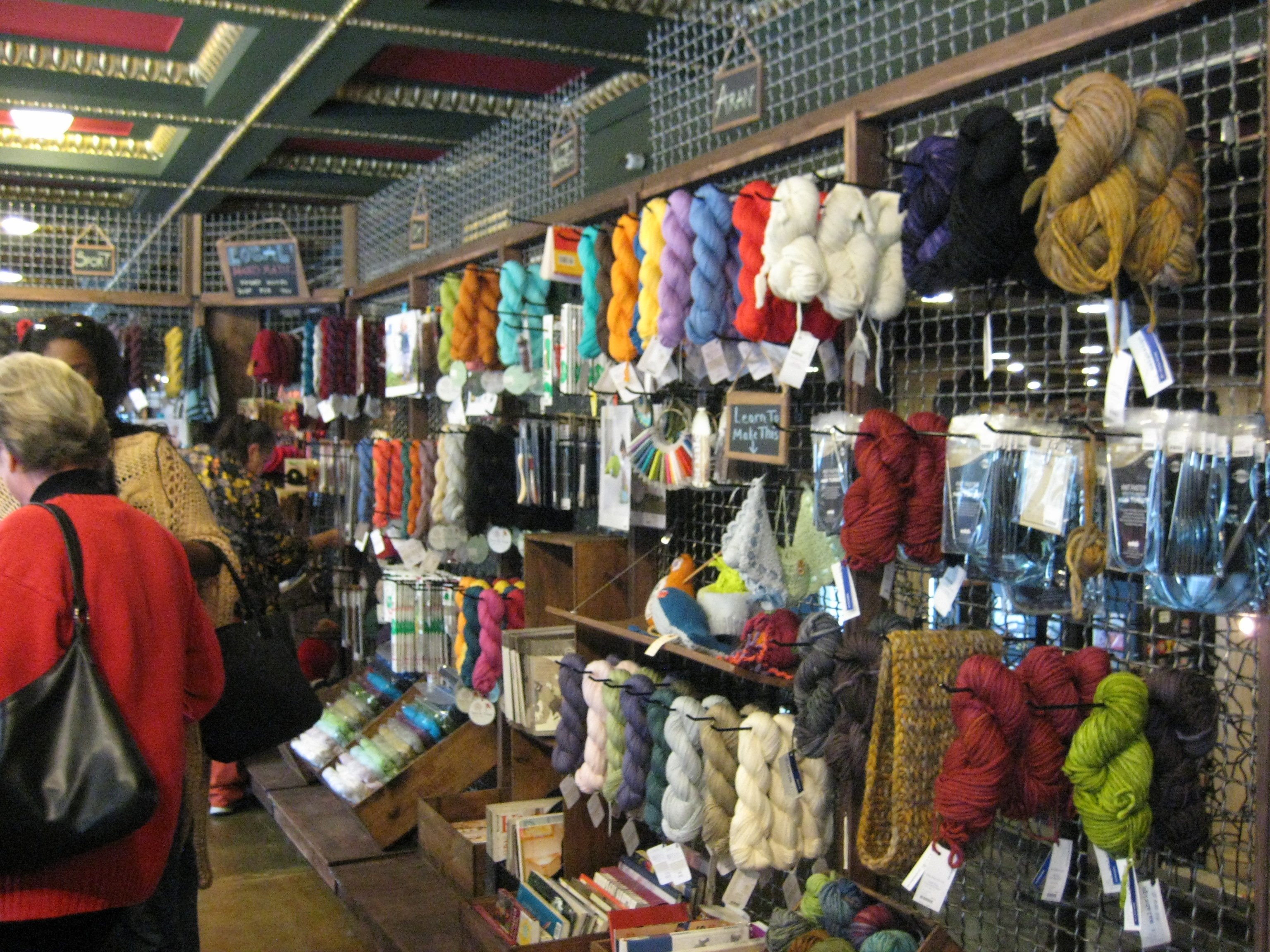 Seems that L.A. County’s local yarn shops (known simply as LYS to those of the knitting persuasion) banded together to promote their emporia by sponsoring said crawl April 11 to 14. Gather, the shop at The Last Bookstore, was one of 32 participants. You could get a “passport” –a sheet of paper with LYS names and addresses printed within small squares–stamped at every store you visited, then possibly win prizes by leaving it at the last shop you visited.
I kept my passport; it’s a terrific guide to the many and varied knitteries hereabouts. Turns out you can shop for yarn & accessories from Claremont and Glendora, to Whittier, Bellflower, Santa Clarita, Torrance and Tarzana. Who knew?
Which gets me wondering: the LYS phenomenon began about the same time that women’s bookstores were taking a nosedive. Do you suppose there’s a correlation? Feminism’s fire transmuted via worsted wool and #7 needles into the DIY (do it yourself) movement? Much less overtly political (“the personal is the political” notwithstanding), but resistance to stultifying norms nonetheless. DIY hasn’t meant simply replicating Martha Stewart place settings (or cupcake decorations or whatever); it’s renewed appreciation for handcrafted items and creativity, and represents a turn away from the mass produced “stuff” that crowds our lives.
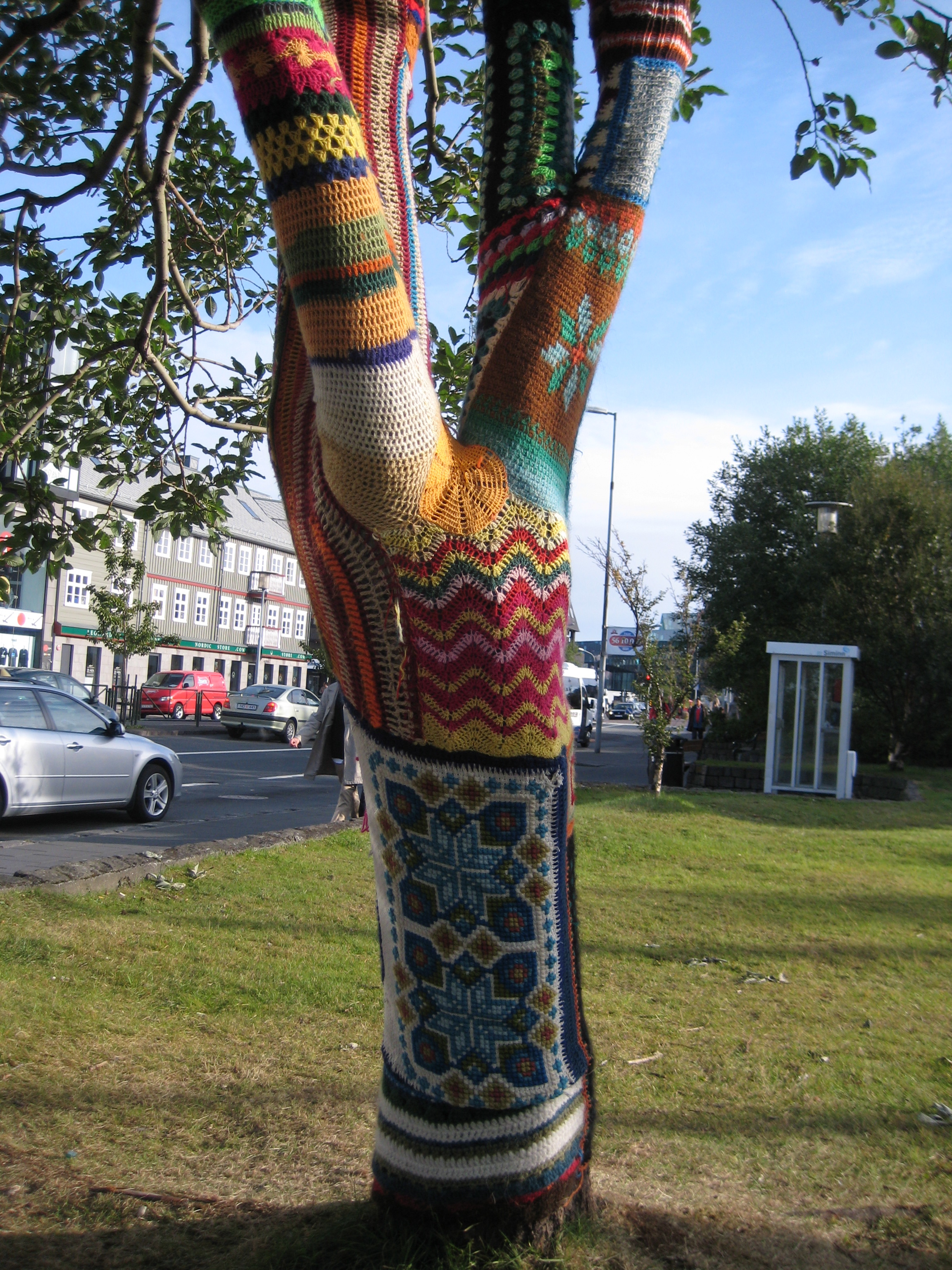 A sweater, even a scarf, takes time and patience to knit and finish. That alone qualifies it as countercultural. Then there are offshoots such as yarn bombing–appropriating public spaces for unexpected and unexplained displays of handiwork. And what about the high concept work of artists such as Masaki Koizumi who actually handknits playgrounds!
I don’t think I can make a case for the DIY movement as daughter of second wave feminism. It’s more like a godchild. But neither do I underestimate the possibilities that open up when women gather together. They’re probably doing more than K1, P2.
April 6, 2013 § Leave a comment
CLOPCLOPCLOPCLOPCLOPCLOPCLOPCLOPCLOPCLOPCLOP.
We awoke this morning to the sounds of the Hollywood Half-Marathon making its way through our neighborhood.
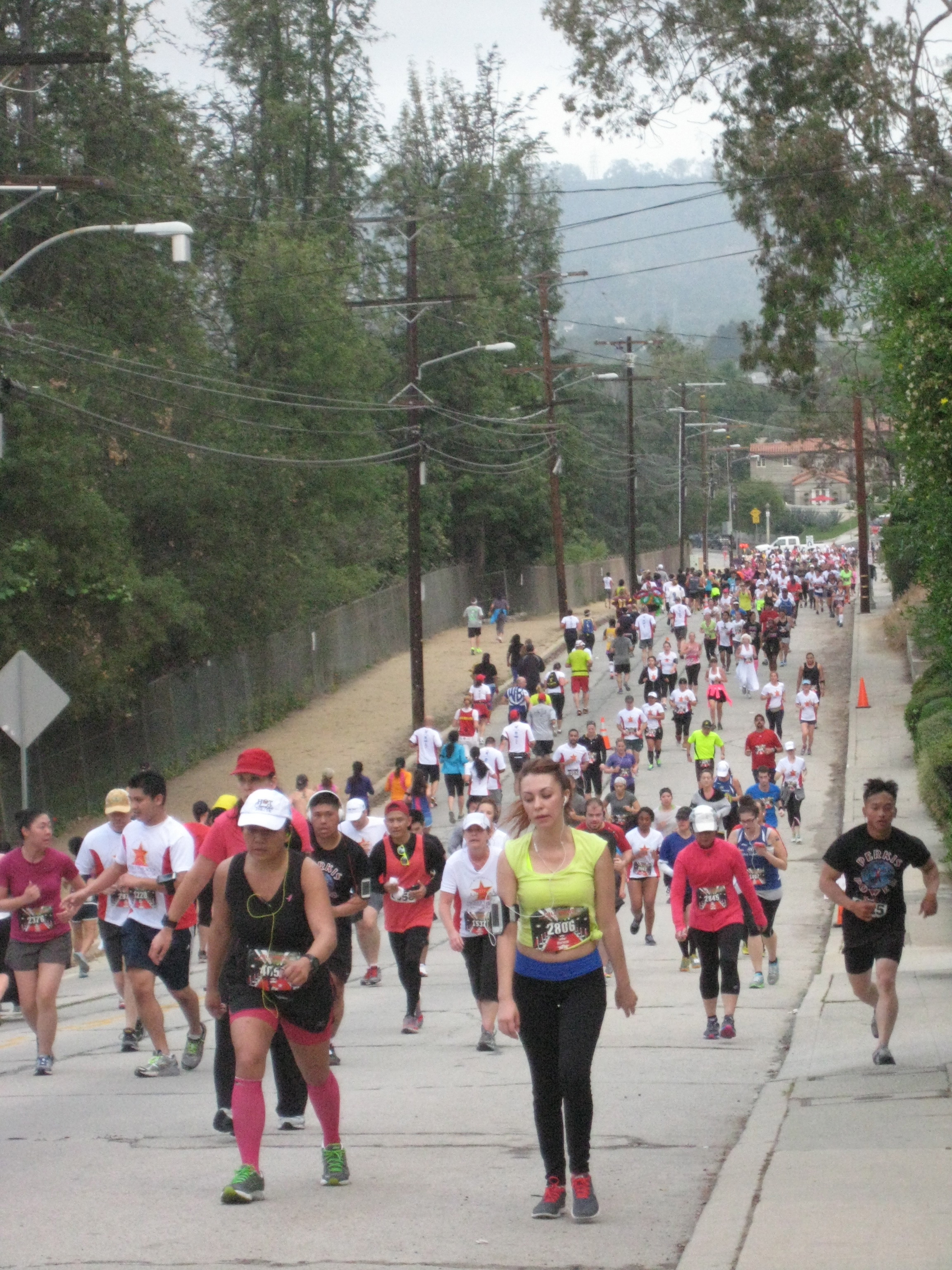 Participants came in all shapes and sizes, ages, ethnicities. Also costumes: Superman, Wonder Woman, tutus, butterfly wings, a man in a filmy white dress and blonde wig. Mostly though, they wore spandex, lots and lots of brightly colored spandex. Enough to stretch all the way from Hollywood & Highland, where the race began, to Sunset & Alvarado, the turn-around, and back again: 13.1 miles.
“Thanks for letting us run through your neighborhood!” a man shouted as he legged it past me. Which was nice of him since it was a bit of a nuisance, hemmed in as we were by parking restrictions until 1 p.m.
Back in the ‘70s when the marathon craze was really taking off, I stood on the berm of a country road in Central Pennsylvania giving out split times–time elapsed since the last marker–for the first marathon of the region. It an all volunteer affair and long before barefoot-running, CamelBaks, energy shots–or spandex. By the end of the race I saw men bleeding from their nipples from the chaffing of cotton/polyester t-shirts.
I don’t remember any women running. That’s how it was back then.
I was jogging regularly at the time, though never as fleet of foot as my father who ran cross-country in high school. After watching the half-marathoners, I dug out his medal from the Marquette University Relay Carnival, c. 1927. On the front, Winged Victory appears in low-relief. Inscribed on the back: 1st prize, 4 mile relay, National Champ.
While my dad might talk about running, he never gloried in having been on a national championship relay team. It wasn’t his way. He never gave up his love of bi-pedal mobility, however, which he lauded by slapping his thigh and repeating the old adage, “Shank’s mare will get you there.”
Evidently all the way from Hollywood to Silverlake and back again.
Tree of Fire
April 1, 2013 § Leave a comment
Good things in L.A. sometimes happen in strange places.
Like Saturday night when I drove downtown to Skid Row. There, in the produce district, Inner City Arts has a serene campus of multiple buildings stocked with all manner of art-making materials. Since 1989, they’ve done what a lot of schools no longer do: provide a space for creativity to flourish.
But their theatre was simply the venue for an independent production from the Roots & Wings Project: “Tree of Fire.”
Three incarcerated women review/relive their lives and choices as the prison burns around them. Very powerful vignettes of exploitation, abuse, grief, and desperation–as well as sisterhood and mutuality.
Original script & music, superb acting on a bare-bones set, each woman contained within a small square of light projected onto the floor.
When a medical emergency forced one of the actors to drop out, playwright and producer Jesse Bliss Woods stepped in as a reader.
It was gratifying to finally see the fruits of so many years of labor. Here’s hoping there will be future productions.
 Real in L.A.